 Soil
SoilTiltmeter Series
Surface-tilt monitoring for buildings, bridges, towers, tunnels and heritage structures. Wireless LoRa / NB-IoT variants run 2–5 years on battery; wired RS485 variants deliver 0.0005° resolution with uninterrupted acquisition.
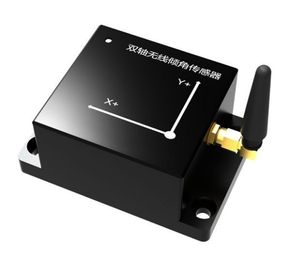
One series, every tilt-monitoring scenario
The SCST-T01 tiltmeter series measures dual-axis surface tilt relative to the horizontal plane. Two sensing technologies and two communication architectures combine into a family that fits everything from a remote, unpowered tower to a continuously powered tunnel — and pairs naturally with our hydrostatic settlement gauges. When vibration events and temperature need to be captured with tilt, use the SCST-WV02 wireless tilt + vibration sensor.
- ✓MEMS & electrolytic dual sensor options
MEMS for wide ±90° range and shock resistance; electrolytic for decade-scale long-term stability.
- ✓Wireless & wired variants
LoRa / NB-IoT wireless with 2–5 year battery life, or RS485 wired for continuous high-accuracy acquisition.
- ✓Built for buildings, heritage & formwork
From dilapidated-building alarms to high-support formwork safety and heritage preservation programs.
A Bubble in Liquid vs a Mass on Springs
An electrolytic tiltmeter seals a conductive electrolyte and an air bubble inside a vial with three platinum electrodes — one common, two differential. As the housing tilts, the bubble shifts and the length of liquid between the two outer electrodes changes, unbalancing their impedances R₁ / R₂. AC excitation prevents polarization, and a Wheatstone bridge turns the differential conductance directly into sin θ. A MEMS tiltmeter instead suspends a silicon proof mass on micro-springs: gravity displaces it by x = m·g·sin θ / k, and differential comb capacitors read the displacement as θ = arcsin(aₓ / g).
Wireless or Wired — Choose by Site Conditions
Pick wireless for flexible, cable-free deployment and years of battery life; pick wired for the highest accuracy and uninterrupted continuous acquisition.
| Parameter | Wireless Tiltmeter (SCST-T01 / SCST-WV02) | Wired Tiltmeter (SCST-T01-RS485) |
|---|---|---|
| Communication | LoRa / NB-IoT wireless | RS485 wired bus |
| Accuracy | 0.005° | 0.003° |
| Resolution | 0.001° | 0.0005° |
| Range | ±90° | ±90° |
| Power | Battery, 2–5 year life | External, continuous operation |
| Protection | IP68, all-weather outdoor | IP65 |
| Operating temperature | -20 ~ 70 ℃ | -20 ~ 70 ℃ |
| Best for | Remote, unpowered sites: dilapidated buildings, towers, bridges | Powered sites: high-support formwork, tunnels |
MEMS and Electrolytic: Two Physics, One Honest Recommendation
These are not a high/low configuration of the same product — they are two different physical principles. We recommend by monitoring period and site vibration, not by price.
| Dimension | Electrolytic Sensor | MEMS Sensor |
|---|---|---|
| Long-term zero stability | 1×10⁻⁸ rad | 1×10⁻⁵ rad |
| Range | ±3° (typical) | ±90° |
| Bandwidth | < 5 Hz | > 1 kHz |
| Shock / vibration tolerance | Moderate | Extremely strong |
| Recommended when | Monitoring period ≥ 5 years: heritage buildings, dams, long-term programs | Vibration / shock environments, wide-range outdoor deployment |
Rigid mounting matters
The base must be rigidly bonded to the structure itself — never to render, tiles or uncured concrete. Our installation guide eliminates "the sensor shaking itself" false signals.
Temperature compensation built in
Electrolytic sensors are temperature-sensitive; without compensation, day-night cycles masquerade as displacement. Compensation is mandatory, not optional, in our designs.
Choose by decades, not by quarter
For a 30-year heritage program, MEMS will drift; electrolytic will not. We state the physical boundary up front so the right choice is obvious before installation — not five years after.
Accuracy Is Decided at the Mounting Surface
A loosely coupled base makes the most expensive sensor worthless. These are the steps our field manual enforces on every installation.
- 1Fix the base rigidly to the structure itself
The mounting base must connect rigidly to the load-bearing structure being measured — base rigidity matters even more than sensor accuracy.
- 2Reject weak surface media
Never install on surface render or paint, on tiles, or on uncured concrete. A base on these media produces "the sensor shaking itself" false signals — the most common field mistake.
- 3Align the measurement axes
The instrument measures dual-axis (A / B) tilt relative to the horizontal plane — align the axes with the directions the structure needs monitored.
- 4Shade from sun, enable temperature compensation
Sun-exposed installs show day-night cyclic swings. Fit a sun shade where needed; on electrolytic units, temperature compensation is mandatory, not optional.
- 5Wire, verify and baseline
Wired units take DC 7–12 V with RS-485 / 4–20 mA output — verify polarity with a multimeter (a reversed line reads zero). Record initial values, then sync tilt and temperature time series to the cloud with threshold alarms.
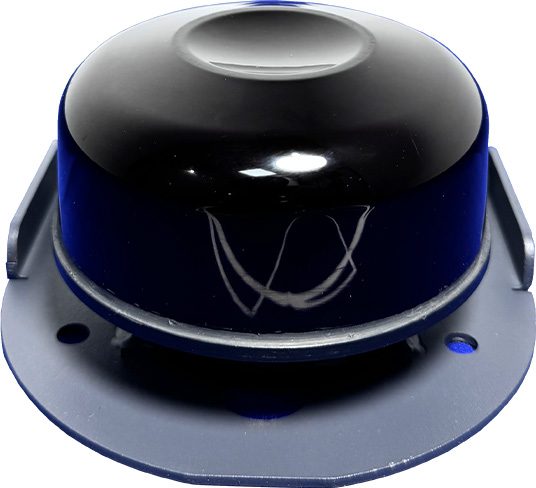


Where the Tiltmeter Series Works
Tilt rarely tells the whole story alone — on most structures it is paired with settlement monitoring. See the combined selection guide on our settlement page.
Dilapidated Buildings
Cable-free installation and multi-year battery life make city-wide aging-building alarm networks practical and affordable.
Tower Tilt
Transmission and telecom towers at remote, unpowered sites — IP68 housings survive all-weather outdoor exposure for years.
Bridge Tilt
NB-IoT cellular transmission gives more reliable long-distance reporting for piers, pylons and approach structures.
High-Support Formwork
During concrete pours, 0.003° accuracy and uninterrupted acquisition catch dangerous formwork movement in real time.
Tunnels
Stable site power supports continuous lining-tilt acquisition over the full construction and operation period.
Heritage Structures
Decade-scale preservation programs for historic towers and timber structures demand 1×10⁻⁸ rad-class long-term stability.
Field Questions, Straight Answers
Compiled from our after-sales records and the fault table in the field manual.
Why does the tilt reading cycle with day and night?
What causes short-lived spikes in the data?
How do we handle slow drift over months and years?
How are the units powered — and what if a reading goes to zero?
Electrolytic or MEMS — how do we choose?
Downloads & Resources
Related Products
Related Cases

Related Solutions

Make an enquiry
Submit your request without leaving the page. Price negotiation stays off the public catalog.
Contact: sales@soilcreate.com · WhatsApp: +86 15356046033